Houston-area humidity, intense summer sun, and an active hurricane season put real stress on outdoor structures, more so than in most parts of the country. Choosing materials for a covered patio isn't just an aesthetic decision here, it directly affects how much maintenance you'll be doing five and ten years from now. This guide walks through the common options for framing, roofing, and ceiling finishes with our climate specifically in mind.
Structural framing: wood versus steel
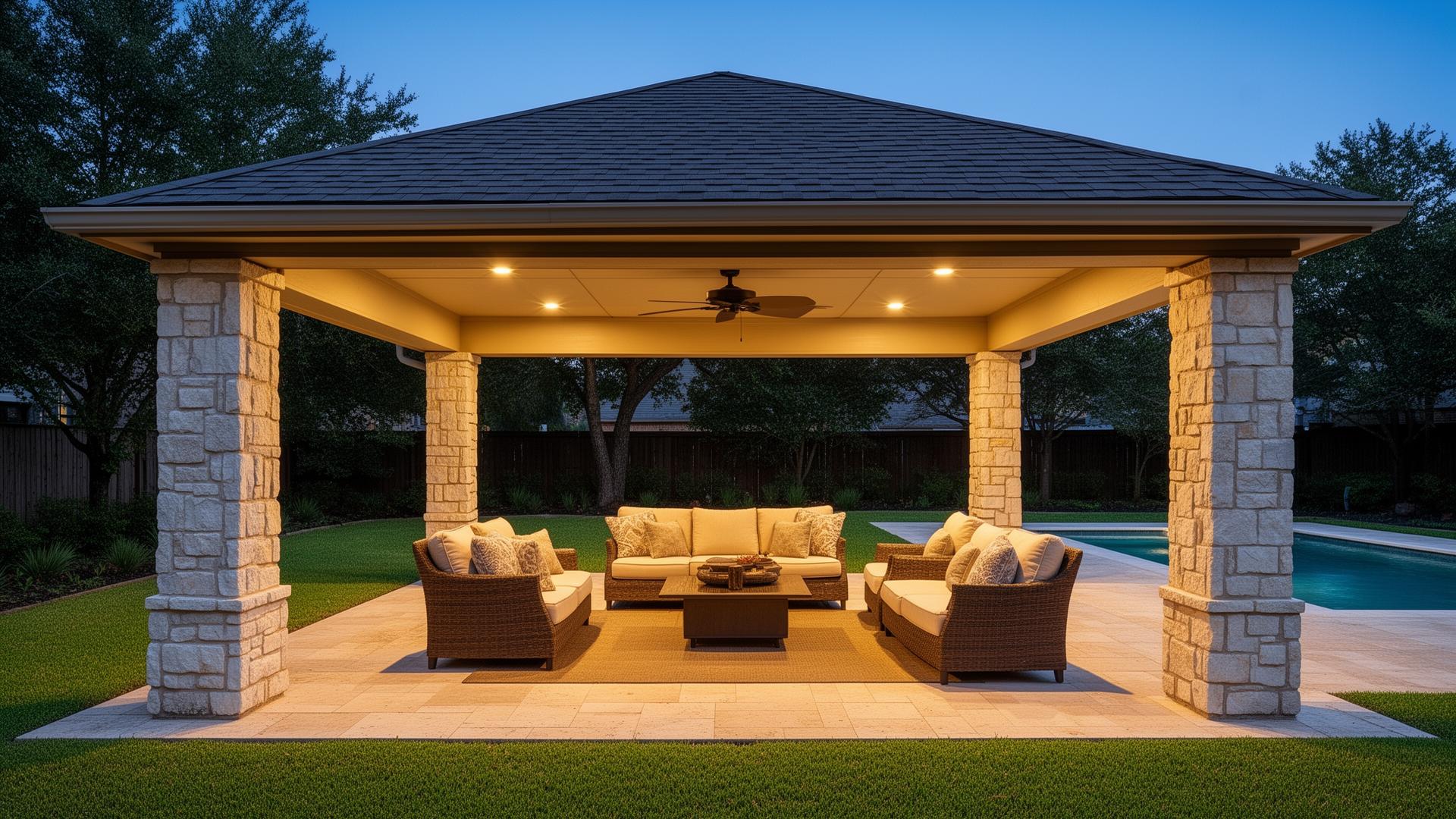
Wood framing, typically pressure-treated lumber for posts and beams, is the traditional choice and still very common because it's cost-effective and familiar to work with. In our climate, though, wood is constantly cycling between damp and dry, which over years can lead to checking, warping, or rot at connection points if it isn't properly sealed and maintained.
Steel framing costs more up front but doesn't absorb moisture the way wood does, and it isn't vulnerable to termites, which are a real concern in this region. For homeowners who want the lowest-maintenance structural option and are comfortable with the higher initial cost, steel is worth considering, particularly for larger spans or freestanding pavilions.
Roof covering choices
Matching your patio roof covering to your existing house shingles is the most common approach for attached patios because it creates a cohesive look from the street and from the yard. Asphalt shingles perform reasonably well here but do have a service life, and matching an aging roof's exact shingle color can be difficult years after the original roof was installed.
Metal roofing has become increasingly popular for patio covers specifically, even on houses with shingle roofs, because it sheds heat and rain effectively and holds up well to wind. Insulated panel roofing, which sandwiches foam insulation between two metal skins, goes a step further by reducing radiant heat coming through the ceiling, which matters a lot during a Houston summer.
- Asphalt shingle: cohesive look, moderate lifespan
- Standing seam metal: durable, sheds heat well, handles wind loads
- Insulated metal panel: best heat performance, higher cost
Ceiling finish options
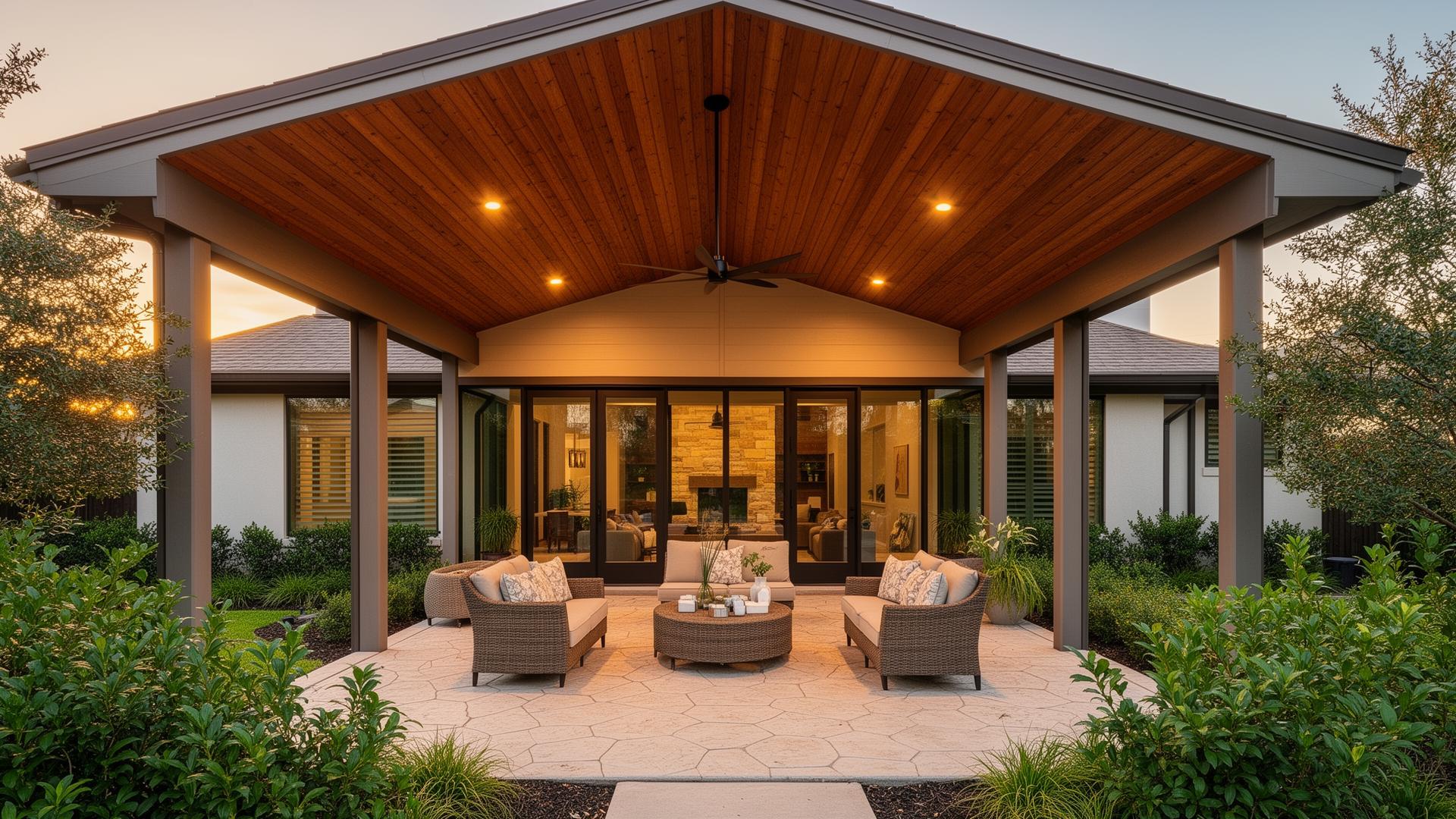
Tongue-and-groove wood ceilings are a classic look for covered patios and read as a real extension of a finished outdoor room. Cedar and other rot-resistant woods handle our humidity reasonably well if properly finished and occasionally resealed, but they do require some ongoing upkeep to prevent graying and moisture damage over time.
Composite or PVC ceiling boards mimic the look of wood tongue-and-groove without the maintenance burden, since they don't absorb moisture or attract insects. They cost more than basic wood but significantly less time and money in upkeep over the life of the patio, which is why they've become a common recommendation for homeowners who want a finished ceiling but don't want to reseal it every couple of years.
Fasteners and hardware matter more here than most places
Standard fasteners can corrode faster in our humid, salt-tinged air, especially closer to the coast around Kemah, Seabrook, and Galveston. Stainless steel or hot-dip galvanized fasteners and connectors cost more than basic hardware but resist corrosion far better over the life of the structure. Rust streaks running down a ceiling or post a few years after construction are almost always a sign that lower-grade fasteners were used.
This is a detail that's invisible in a finished photo but shows up as a maintenance problem down the road, so it's worth asking your contractor directly what grade of hardware they use, particularly if your property is closer to the coast.
Balancing cost, looks, and maintenance
There's no single right answer here; it depends on how much upkeep you're willing to do and how long you plan to stay in the home. A homeowner planning to stay for decades may find the higher up-front cost of steel framing, metal roofing, and composite ceiling boards pays off in avoided maintenance. A homeowner who wants the classic wood look and doesn't mind resealing every few years can get excellent results from traditional materials as long as they're properly installed and finished.
Whatever combination you choose, ask your contractor how each material has actually performed on patios they've built in this specific climate, not just in general terms. Local experience with our humidity and storm patterns is worth more than a manufacturer's spec sheet.
Common Questions
Covered Patios FAQs
Do wood covered patios rot quickly in Houston humidity?
Not if properly built with pressure-treated or naturally rot-resistant lumber, sealed correctly, and given adequate drainage. Untreated or poorly finished wood, on the other hand, will show damage much faster in our climate than in a drier region.
Is metal roofing noisy during heavy rain?
It can be louder than shingles during a downpour, though solid decking underneath and insulated panel options reduce this noticeably. Many homeowners find they get used to it quickly, and some like the sound.
Are composite ceiling boards worth the extra cost?
For homeowners who want a finished wood look without ongoing resealing and upkeep, most find it worthwhile over the years, though it depends on your budget and how much maintenance you're willing to take on yourself.
Want a real number for your backyard?
We walk the property, measure, and hand you a written proposal with the scope spelled out.
Get a Free Estimate