The pergola material you choose has to survive Houston's humidity, intense summer sun, and hurricane season, not just look good on installation day. We build with all three major options, and each has a real trade-off between cost, maintenance, and performance. Here's a straightforward look at how cedar, aluminum, and louvered pergolas compare for our climate.
Cedar: The Traditional Choice
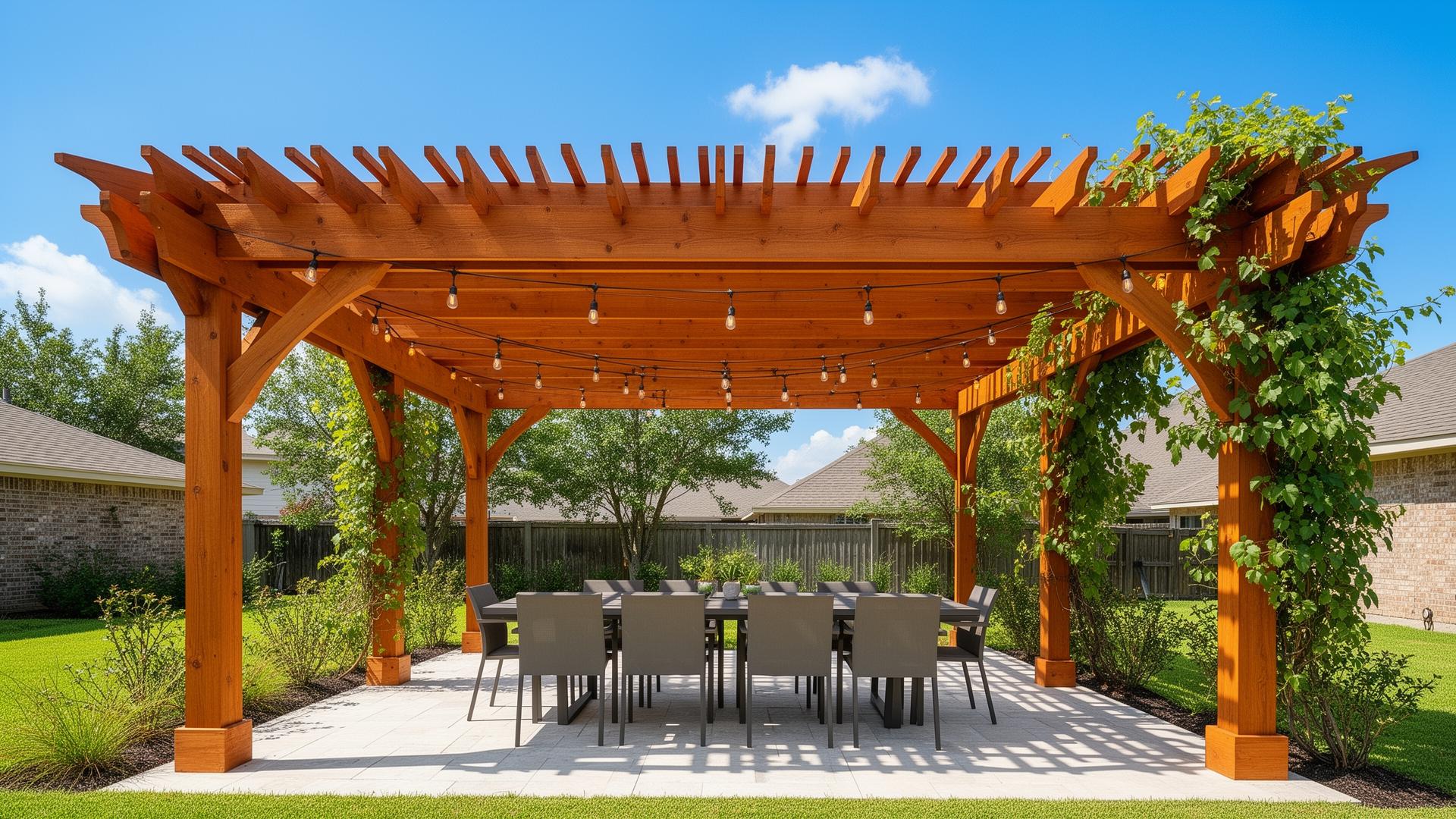
Cedar is naturally resistant to rot and insects, which is part of why it's remained a popular pergola material for decades. It has a warm, classic look that fits traditional and craftsman-style homes across Friendswood and West University Place particularly well.
The trade-off is maintenance. Houston's humidity and UV exposure will gray and weather untreated cedar within a year or two, so plan on staining or sealing every two to three years to keep it looking sharp and to protect the wood from moisture damage over time.
Aluminum: Low Maintenance, Modern Look
Aluminum pergolas don't rot, warp, or attract termites, which makes them a strong fit for our humid, bug-friendly climate. Powder-coated finishes hold their color for years with essentially no upkeep beyond an occasional rinse.
The look tends to read more modern or transitional than traditional cedar, with cleaner lines and slimmer profiles. For homeowners in newer developments around Iowa Colony and Manvel where builders favor contemporary exteriors, aluminum often blends in better than wood.
Louvered Pergolas: Adjustable Shade and Rain Control
A louvered pergola has rotating slats, usually aluminum, that you adjust to control light and can close to shed rain. This is the closest a pergola gets to functioning like a pavilion while keeping the open, airy pergola aesthetic when the louvers are open.
Louvered systems cost more than a fixed-slat pergola of either wood or aluminum because of the moving hardware and, often, a motorized control option. For homeowners who want one structure to handle both bright sun and sudden Gulf Coast rain showers, it's usually worth the added cost.
Wind and Storm Performance
All three materials can be engineered to meet local wind load requirements when properly anchored, but they behave differently in a storm. Cedar can crack or split under repeated stress if it isn't properly fastened and maintained. Aluminum is lightweight and strong, but fixed-slat designs let wind pass through more easily than louvered systems with large closable surfaces.
Louvered pergolas are typically designed to open automatically or manually in high wind to relieve pressure, which is a meaningful advantage during hurricane season in Alvin, Kemah, and Galveston.
Cost Comparison at a Glance
As a rough estimate, fixed cedar pergolas tend to be the least expensive per square foot, aluminum fixed-slat pergolas run a bit higher due to material and fabrication costs, and louvered aluminum pergolas sit at the top of the range because of the moving parts and, often, motorization.
These are general patterns, not quotes. Site conditions, size, electrical work for lighting or motorized louvers, and finish options all move the final number.
Which Fits Your Situation
If you love the warmth of natural wood and don't mind periodic maintenance, cedar remains a great choice, especially for a pool deck or garden feature where the look matters most. If low maintenance is the priority and you're comfortable with a more modern look, aluminum is hard to beat.
If you want a single structure that adapts to sun, rain, and wind throughout the year, a louvered pergola is the most versatile, if also the most expensive, option.
Common Questions
Pergolas FAQs
Do aluminum pergolas rust in humid weather?
Quality aluminum pergolas are powder-coated and resist rust and corrosion even in humid, coastal air, which is why they hold up well in areas like Seabrook and Texas City.
How often does a cedar pergola need to be resealed?
Most cedar pergolas in our climate need staining or sealing every two to three years to prevent graying, cracking, and moisture damage.
Are louvered pergolas worth the extra cost?
If you want real rain protection and adjustable shade without committing to a full pavilion, yes. If you mainly want dappled shade for a garden or seating nook, a fixed-slat pergola is usually enough.
Want a real number for your backyard?
We walk the property, measure, and hand you a written proposal with the scope spelled out.
Get a Free Estimate