When homeowners in Pearland or League City ask us to build a privacy fence, one of the first decisions is picket style. Board-on-board and side-by-side are both popular, but they perform differently when it comes to privacy, wind, cost, and how they look from each side of the fence line.
How Each Style Is Built
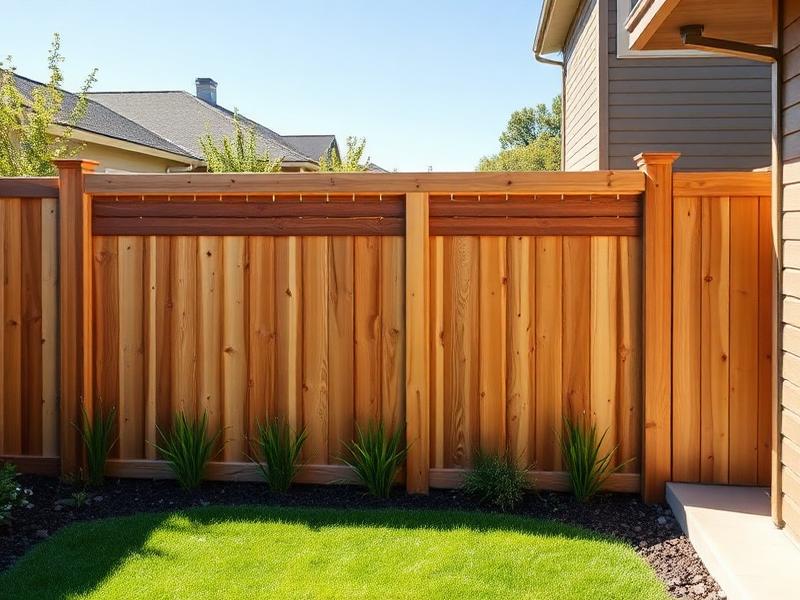
Side-by-side fencing uses pickets butted tightly against each other in a single row, attached to horizontal rails. It's the more traditional privacy fence look and uses less lumber, which keeps the cost down. When installed well with tight picket spacing, it offers solid privacy, though minor gaps can appear over time as wood shrinks slightly with seasonal moisture changes.
Board-on-board uses two overlapping layers of pickets, staggered so that the gaps in the front layer are covered by the back layer. This overlapping design means there's no direct sightline through the fence from any angle, even as the wood naturally moves with humidity and temperature.
Privacy and Sightline Differences
This is where the two styles diverge most. Side-by-side fencing built with pickets pressed tightly together at installation can still develop small gaps as the cedar dries out and shrinks over the following months, especially during our hot, dry summers. Those gaps are usually minor but can be noticeable depending on lighting and angle.
Board-on-board avoids this issue almost entirely because of the overlapping design — even if individual boards shrink slightly, the second layer still blocks the sightline. For homeowners whose top priority is complete visual privacy from neighbors on both sides, board-on-board is generally the stronger choice.
Appearance From Both Sides
Side-by-side fencing typically has a 'good side' and a 'bad side' — one side shows the smooth face of the pickets while the other shows the horizontal rails and picket edges. This matters for neighbor relations, since one household usually ends up looking at the less finished side unless the fence is shared and both sides are treated the same.
Board-on-board looks essentially the same from both sides because the overlapping picket pattern is visible from either direction. This makes it a popular choice for fence lines shared with neighbors, since neither side feels like they got the 'bad side' of the fence.
Cost and Material Differences
Board-on-board uses roughly 30% more lumber than side-by-side because of the overlapping layers, which increases material cost accordingly. For a large property with a lot of linear footage to fence, that difference adds up and is worth weighing against how much you value the privacy and dual-sided appearance benefits.
Side-by-side remains a reasonable, cost-effective choice for side and back yard sections that aren't shared with neighbors or don't need the same level of guaranteed privacy, letting you allocate more of the budget to board-on-board where it matters most.
- Side-by-side: lower cost, single 'good side,' can show minor gaps as wood shrinks
- Board-on-board: higher cost, same appearance both sides, blocks sightlines fully
- Mixing styles by yard section is a common way to balance budget and privacy needs
Wind Performance in Storm Season
Because board-on-board is a heavier, more solid structure, it catches slightly more wind load than side-by-side fencing, which is worth factoring in on exposed lots or properties closer to the coast. Proper post sizing and spacing become even more important with board-on-board for this reason.
Side-by-side fencing, being lighter, puts somewhat less strain on posts during high wind events, though the difference is generally secondary to overall post depth and quality when it comes to storm survivability.
Common Questions
Fences FAQs
Which is better for privacy, board-on-board or side-by-side?
Board-on-board provides more consistent, complete privacy because its overlapping design eliminates sightlines even as the wood naturally shrinks over time.
Why does side-by-side have a 'good side' and 'bad side'?
The picket-and-rail construction means one face shows smooth boards while the other shows the rail structure. Board-on-board avoids this since both sides look the same.
Is board-on-board significantly more expensive?
It typically uses about 30% more lumber than side-by-side, so material cost is higher, but many homeowners find the added privacy and dual-sided appearance worth it.
Does picket style affect how the fence handles wind?
Board-on-board is slightly heavier and catches a bit more wind than side-by-side, so proper post depth and spacing matter even more with that style.
Want a real number for your backyard?
We walk the property, measure, and hand you a written proposal with the scope spelled out.
Get a Free Estimate