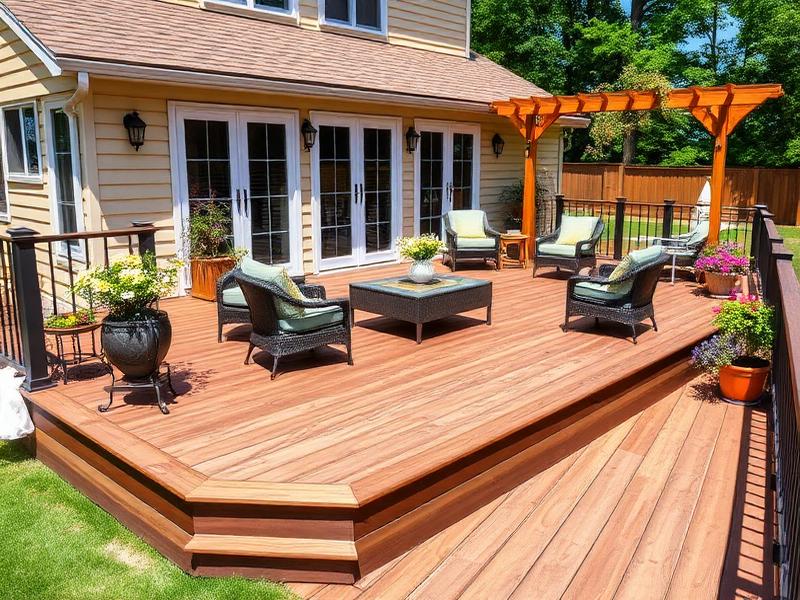
If you've ever hopped across a scalding pool deck to reach the water, you know surface temperature matters as much as looks. Around Pearland, League City, and Clear Lake, where pool season runs long and the sun is intense, material choice and shade planning make the difference between a deck you use daily and one you avoid at midday.
Why Some Decking Gets Dangerously Hot
Dark, dense materials absorb more solar radiation and hold that heat, which is why dark composite boards, dark-stained wood, and dark pavers can reach uncomfortable, sometimes painful, temperatures on a cloudless Texas afternoon. Reflectivity and material density both play a role, and so does how much direct sun a section of deck gets throughout the day.
Moisture content matters too. Wood that's been recently wetted, whether from splashing or a sprinkler, cools somewhat through evaporation, but once it dries out fully in full sun it heats back up quickly. This is part of why pool decks in full sun feel hotter by afternoon than the same material in a shaded yard.
Wood Decking Around Pools
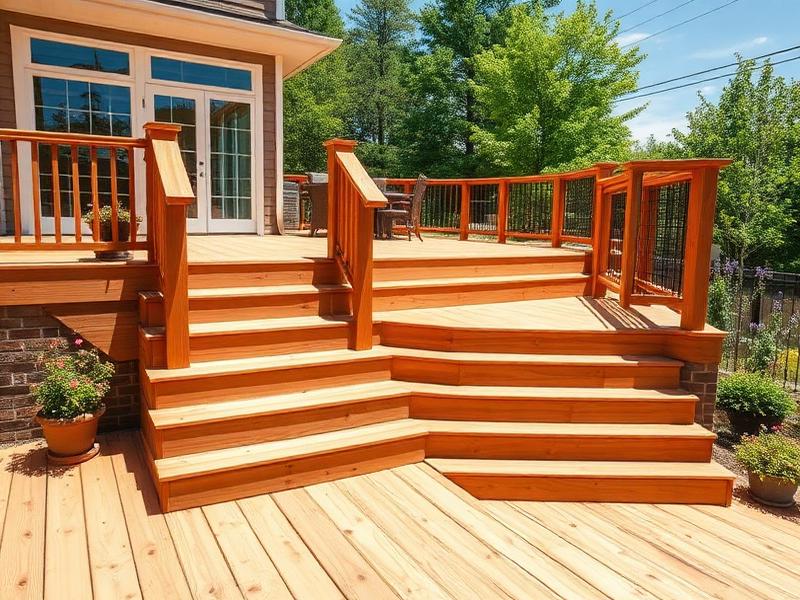
Cedar and other wood decking tend to run cooler underfoot than dark composite or dark pavers because of wood's natural properties and typically lighter, more reflective tones. That said, wood near a pool needs extra attention to sealing since splash-back and chlorinated water add another layer of moisture exposure beyond normal rain.
If you go with wood around a pool, plan for a slip-resistant finish and a maintenance rhythm that accounts for the extra moisture. It's a good-looking, comfortable option as long as you're willing to keep up with sealing.
Composite Decking Choices for Pool Areas
Composite is popular around pools because it resists water damage completely, but color choice is critical. Light gray, sand, and driftwood tones stay dramatically cooler than espresso or charcoal composite boards in direct sun, sometimes by a wide enough margin that it changes whether you can comfortably walk barefoot at 2 p.m.
Many composite manufacturers now offer capped boards specifically marketed as cooler-touch or heat-mitigating, using reflective technology in the outer layer. If a pool deck is the primary use case, ask about these specific product lines rather than defaulting to whatever color you like best.
The Role of Shade in Pool Deck Comfort
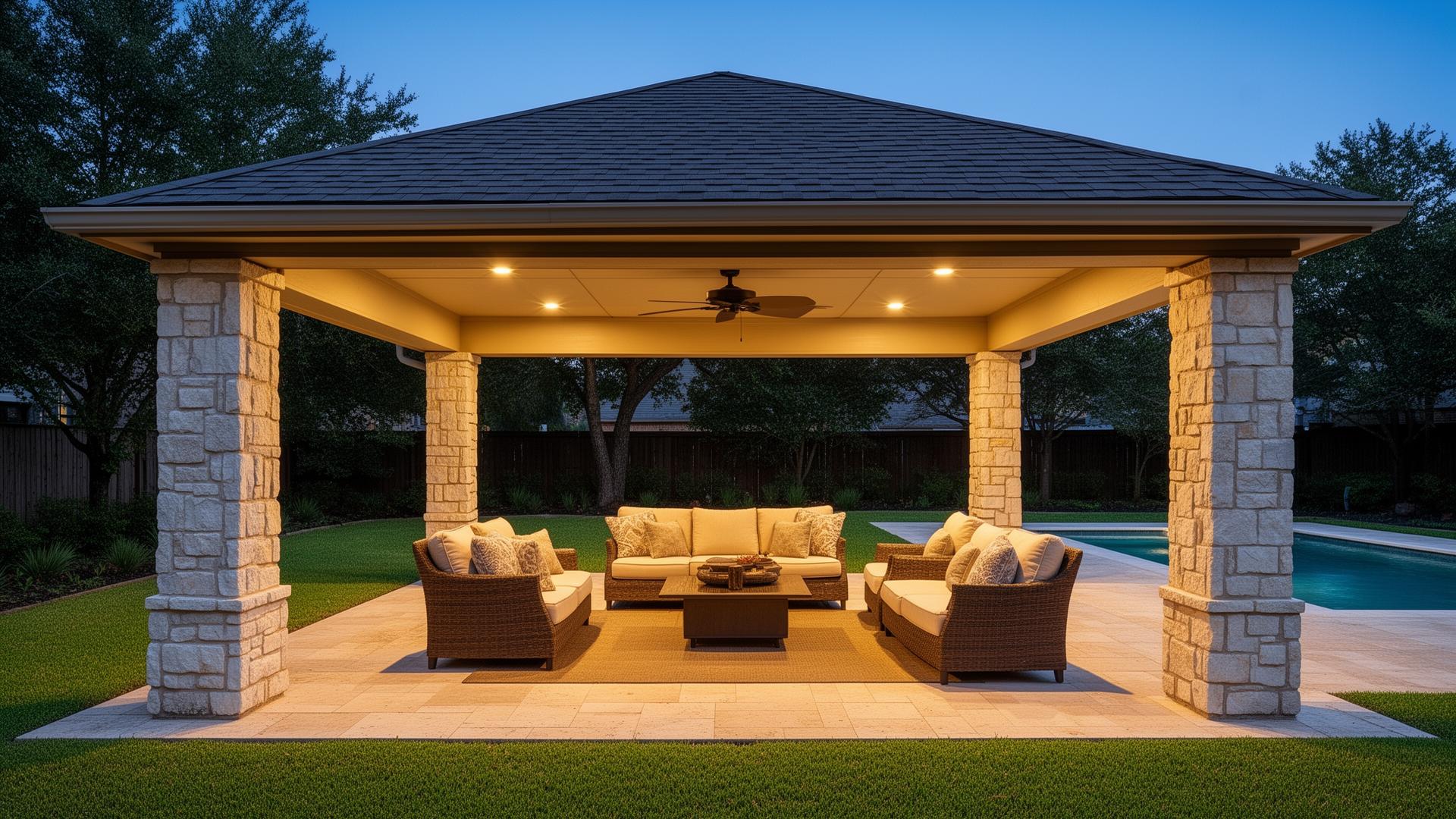
No decking material, no matter how light-colored, stays fully cool under six hours of direct Texas sun. Pairing a pool deck with a pergola over the lounging area, or a covered patio section near the pool's edge, dramatically extends the number of comfortable hours you get each day.
A pergola with slats oriented to block the harshest midday sun, or fitted with a shade cloth or louvered cover, can knock the surface temperature of the decking beneath it down substantially compared to open sun just a few feet away. This is one of the most effective, lowest-maintenance ways to make a pool deck usable all summer.
- Light-colored composite or wood decking in main sun-exposed zones
- Pergola or shade structure over lounge and seating areas
- Keep a shaded path from the house to the pool for hot mid-day walks
Layout Choices That Reduce Heat Buildup
How you arrange your deck matters almost as much as the material. Wide open expanses of decking in full sun heat up more than the same square footage broken up by planting beds, a pergola footprint, or a stepped-down patio section that introduces some ground-level relief.
Orienting the largest open deck sections away from the harshest western sun, when your lot allows it, also helps. If your pool deck faces west, that's exactly where a shade structure earns its keep in the late afternoon and evening, which is often when families actually want to be outside.
Putting It Together for Your Yard
The most comfortable pool decks we build combine a lighter-toned, water-resistant material with at least one shaded gathering zone. That combination handles both the surface-temperature problem and the simple fact that people need a break from direct sun during a Texas summer.
We'll walk your yard's sun path with you, factor in your pool's orientation, and recommend a material and shade combination that fits your budget and how you actually plan to use the space.
Common Questions
Decks FAQs
Is composite or wood cooler around a pool?
It depends more on color than material type. Light-colored wood and light-colored composite perform similarly; the biggest heat differences come from choosing light tones over dark ones.
Are there decking products made specifically to stay cooler?
Yes, several composite manufacturers offer capped boards designed to reduce surface heat gain. We can point you toward specific product lines during your consultation.
How much does a pergola help with pool deck heat?
Shading a section of deck can meaningfully lower the surface temperature underneath it compared to full sun nearby, and it extends the hours the space is comfortable to use.
Can you add shade to an existing pool deck?
In most cases yes. A pergola or shade structure can often be added to an existing deck footprint without redoing the decking itself, as long as the structure below can support it. Call (713) 575-7395 and we'll take a look.
Want a real number for your backyard?
We walk the property, measure, and hand you a written proposal with the scope spelled out.
Get a Free Estimate